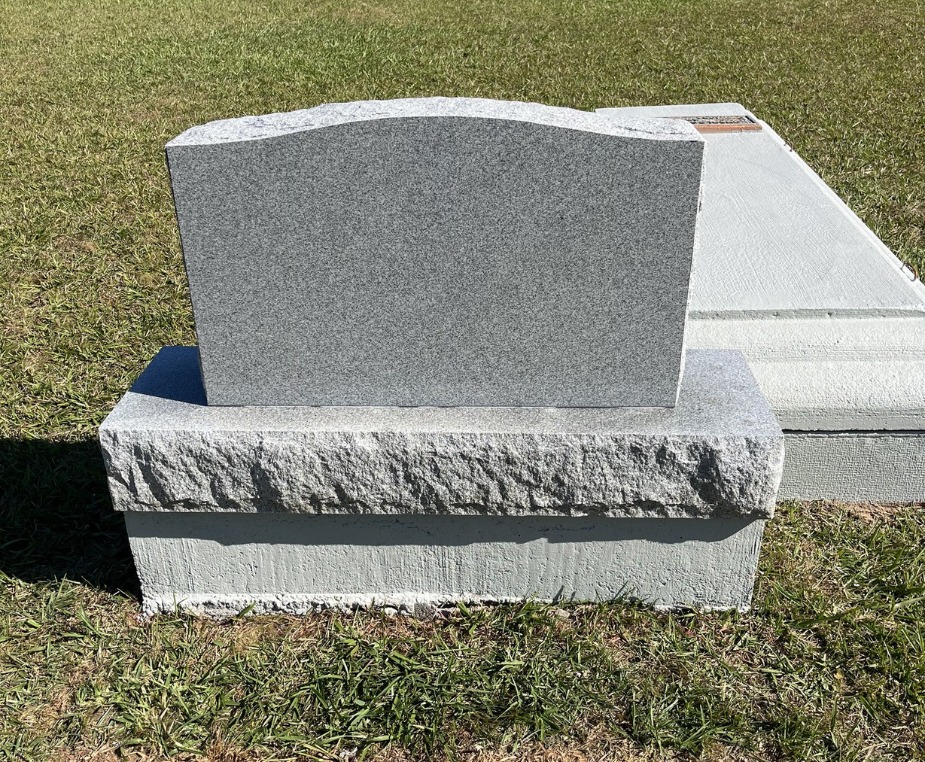
From Blank Granite to a Lasting Memorial: How a Monument Is Created
Granite memorials are more than polished stone. Behind every name, date, artwork, and inscription is a process that requires planning, precision, and skilled craftsmanship.
A memorial begins long before the lettering is carved into the stone. From selecting the granite and creating the design to engraving and final installation, each step plays an important part in creating a tribute that will stand for generations.
At Texas Monuments, we help families throughout Southeast Texas and Southwest Louisiana understand their options and create memorials that reflect the people and stories they want to remember.
Granite Memorials Begin with Quality Stone
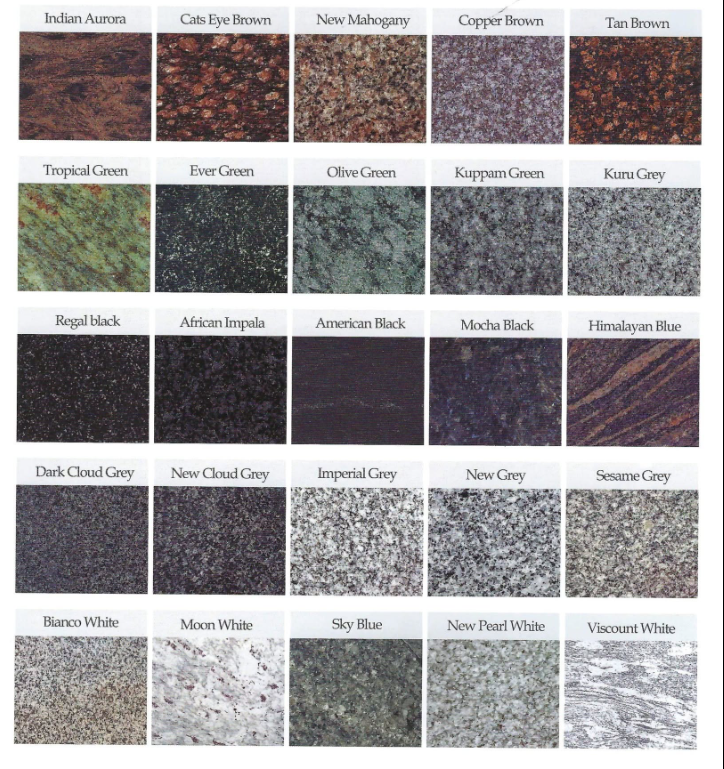
Every granite memorial begins with selecting the stone itself.
Granite is commonly used for headstones and monuments because it is durable, naturally beautiful, and able to withstand years of exposure to sun, rain, humidity, and changing weather conditions.
Families can choose from different granite colors and finishes depending on the style of memorial they prefer. The color of the granite can also affect the appearance and contrast of lettering, artwork, and other design details.
The size and shape of the stone will depend on the type of memorial being created. Options may include upright monuments, flat grave markers, slant markers, companion monuments, memorial benches, and other custom designs.
Cemetery requirements may also affect the size or style that can be installed, so those guidelines should be considered early in the process.
Designing Custom Granite Memorials
Once the granite and memorial style have been selected, the design process begins.
This is where ideas and memories begin taking shape on the stone. The layout may include names, dates, inscriptions, artwork, religious symbols, military emblems, floral designs, or other meaningful details.
Some families already know exactly what they want. Others may need help deciding which elements to include or how everything should be arranged.
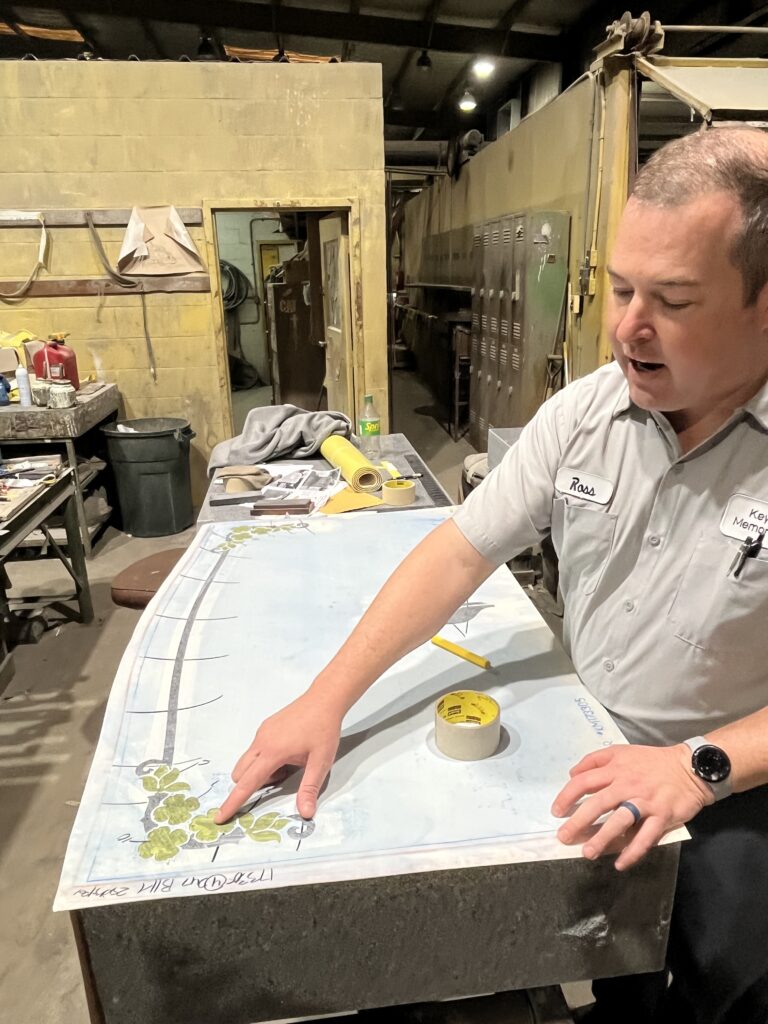
Before the engraving process begins, the design is carefully reviewed. Spelling, dates, placement, and artwork should all be checked to make sure the layout is correct before the permanent work begins.
Preparing the Granite for Sandblasting
For many granite memorials, lettering and designs are created through sandblasting.
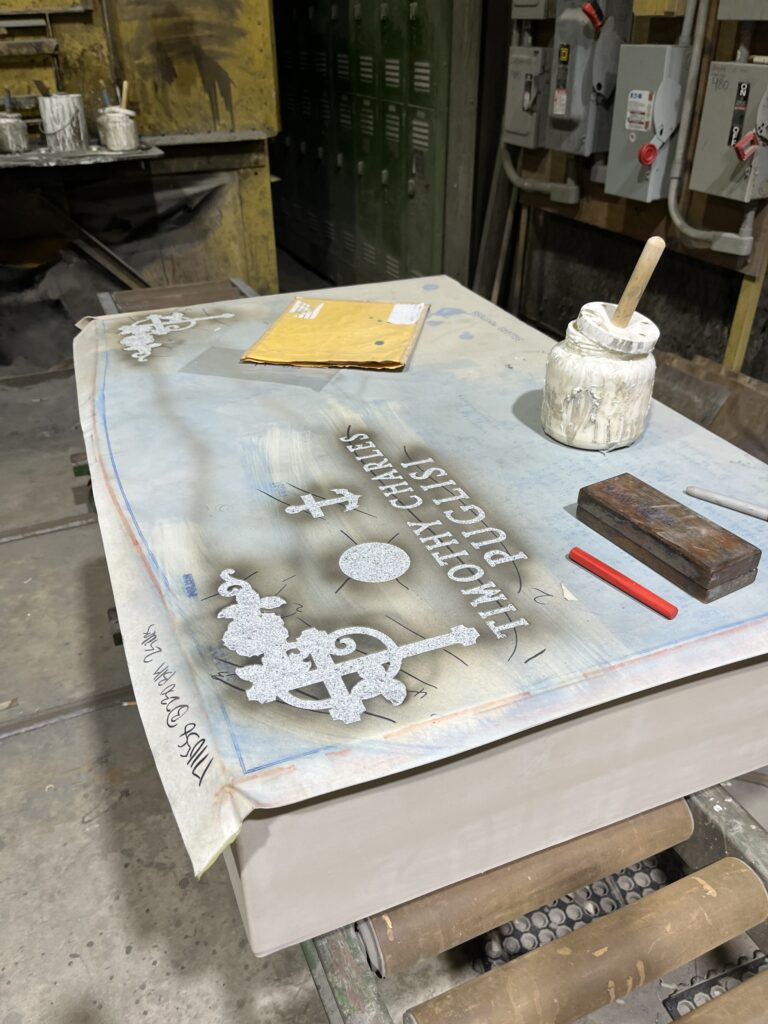
Before sandblasting begins, the design is transferred onto a special stencil that is applied to the granite. The areas that will be engraved are carefully prepared while the rest of the stone remains protected.
This step requires attention to detail because the stencil guides where the names, dates, lettering, and artwork will be carved.
Once everything is properly positioned, the memorial is ready for sandblasting.
Sandblasting the Lettering and Designs
Sandblasting uses compressed air and abrasive material to carve into the surface of the granite.
The process creates deep, clean lettering and design details directly in the stone. The depth and precision of the engraving help names, dates, and inscriptions remain visible and readable over time.
Sandblasting can be used to create many different elements on a memorial, including lettering, borders, flowers, crosses, symbols, and custom artwork.
While the finished result may look simple and polished, the work behind it requires skill and careful attention. Every letter, number, and design element must be properly positioned and carved with precision.
Finishing Granite Memorials
After sandblasting is complete, the memorial moves through its finishing stages.
Depending on the design, this may include cleaning the stone, checking the engraving, adding appropriate finishes to lettering or design areas, and completing a final inspection.
This is also the time to make sure the finished memorial matches the approved design and that every detail has been completed correctly.
The combination of polished granite, carved lettering, and personalized artwork gives the memorial its finished appearance.
Preparing for Cemetery Installation
Once the memorial is complete, the next step is preparing for installation.
Installation is more than simply placing a monument at the cemetery. The site must be properly prepared so the memorial can sit level and remain stable.
Depending on the memorial and cemetery requirements, foundation preparation may be needed before the stone is placed.
The memorial is then carefully transported, positioned, leveled, and installed. Because granite monuments can be extremely heavy, proper equipment and experience are important during this part of the process.
A Memorial Built to Last
The journey from blank granite to a finished memorial involves many steps, but each one serves a purpose.
The granite provides strength and beauty. The design tells a story. Sandblasting permanently carves the names, dates, and details into the stone. Careful installation gives the memorial a secure place where family and friends can visit and remember.
At Texas Monuments, we are proud to create custom granite headstones, grave markers, memorial benches, and monuments for families throughout Southeast Texas and Southwest Louisiana.
From the first design ideas to the completed memorial, every step is handled with care, precision, and respect for the story being preserved.