Cremation Urns and Memorials: A Guide for Families
Cremation gives families several ways to honor and remember a loved one. Cremated remains may be kept in an urn at home, buried in a cemetery, placed in a columbarium, scattered in a meaningful location, or divided among family members.
Understanding the different cremation urns and memorial options can help you choose what works best for your family.
Understanding Cremation Memorials
A cremation memorial is a permanent tribute for someone who has been cremated. It may be an urn, grave marker, upright monument, memorial bench, plaque, or columbarium niche.
Choosing cremation does not prevent a family from having a headstone or another permanent memorial. Cremated remains may be buried in a cemetery and marked much like a traditional burial site.
Types of Cremation Urns
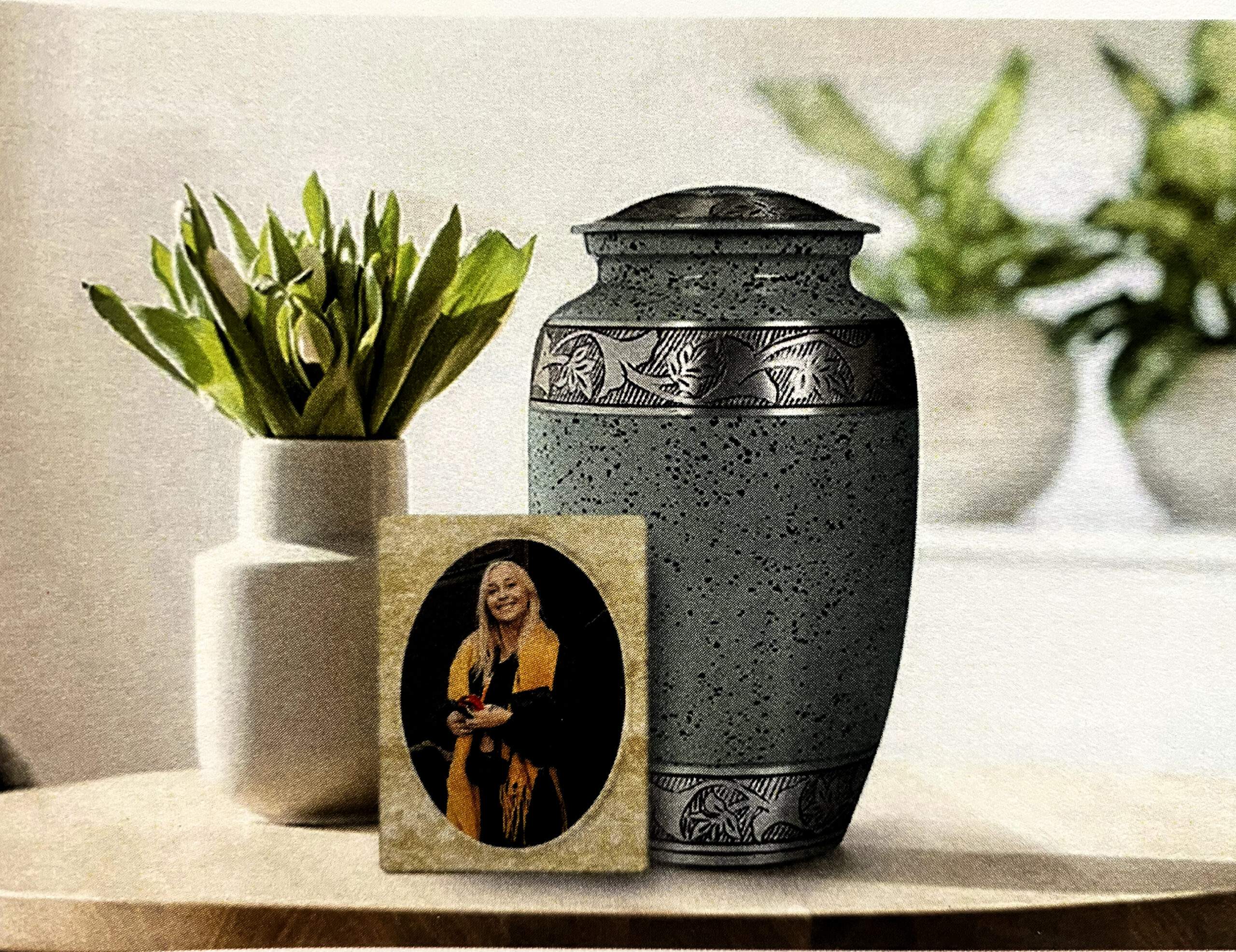
An urn is a container made to hold cremated remains. Urns come in different materials, sizes, and styles. The best choice depends mainly on where the urn will be placed.
Burial Urns
Burial urns are made for placement in the ground. Some cemeteries also require an urn vault to protect the urn and help prevent the ground from settling.
Display Urns
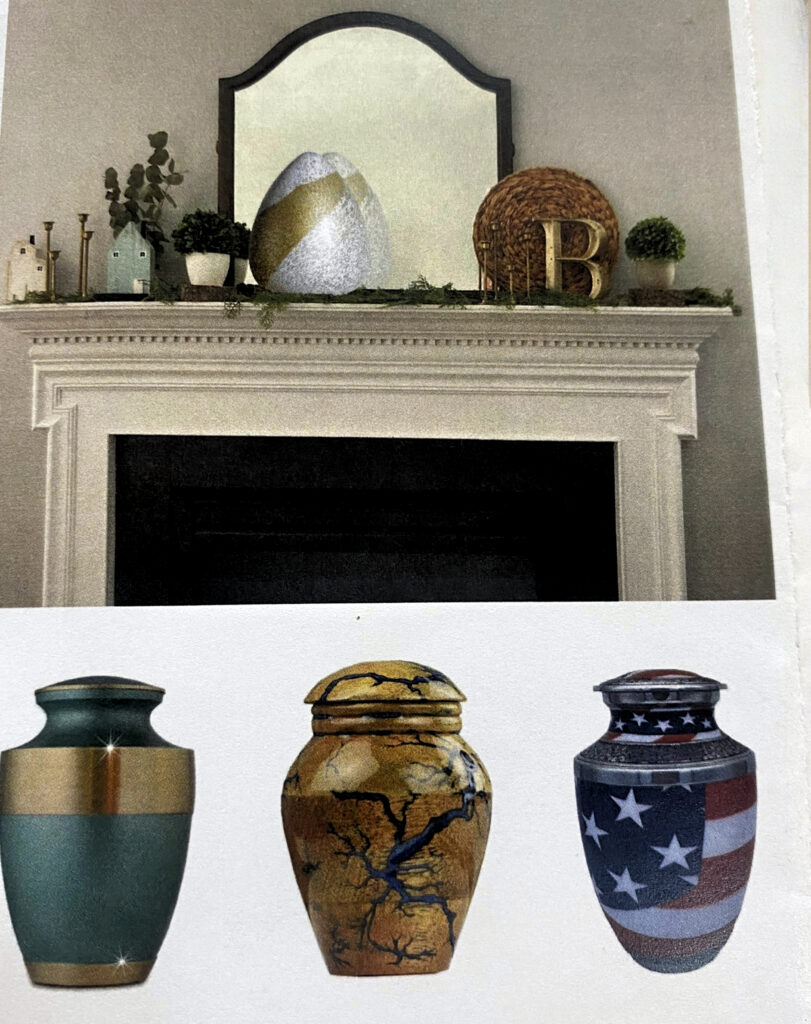
Display urns are designed for the home or a columbarium niche. Common materials include granite, marble, bronze, wood, ceramic, and glass.
Companion Urns
Companion urns hold the remains of two people, often spouses who want to be memorialized together.
Keepsake Urns
Keepsake urns hold a small portion of cremated remains. They are often chosen when several relatives would each like a personal memorial.
Biodegradable Urns
Biodegradable urns are made to break down naturally in soil or water. They may be used for a green burial or scattering ceremony where permitted.
What to Consider When Choosing a Cremation Urn
Where the urn will be placed should guide the material, size, and design you choose.
Material
Granite and stone urns are durable and can often be engraved with names, dates, artwork, or a short inscription. Bronze also works well in many cemetery settings. Wood, ceramic, and glass are commonly selected for indoor display, while marble may be suitable for a home or cemetery.
Before ordering an urn for cemetery placement, ask the cemetery which materials and dimensions it allows.
Size
Urn capacity is measured in cubic inches. A commonly used guideline is one cubic inch for each pound of body weight before cremation. A standard adult urn usually holds about 200 cubic inches.
If the remains will be divided among several urns, consider the combined capacity of all containers.
Personalization
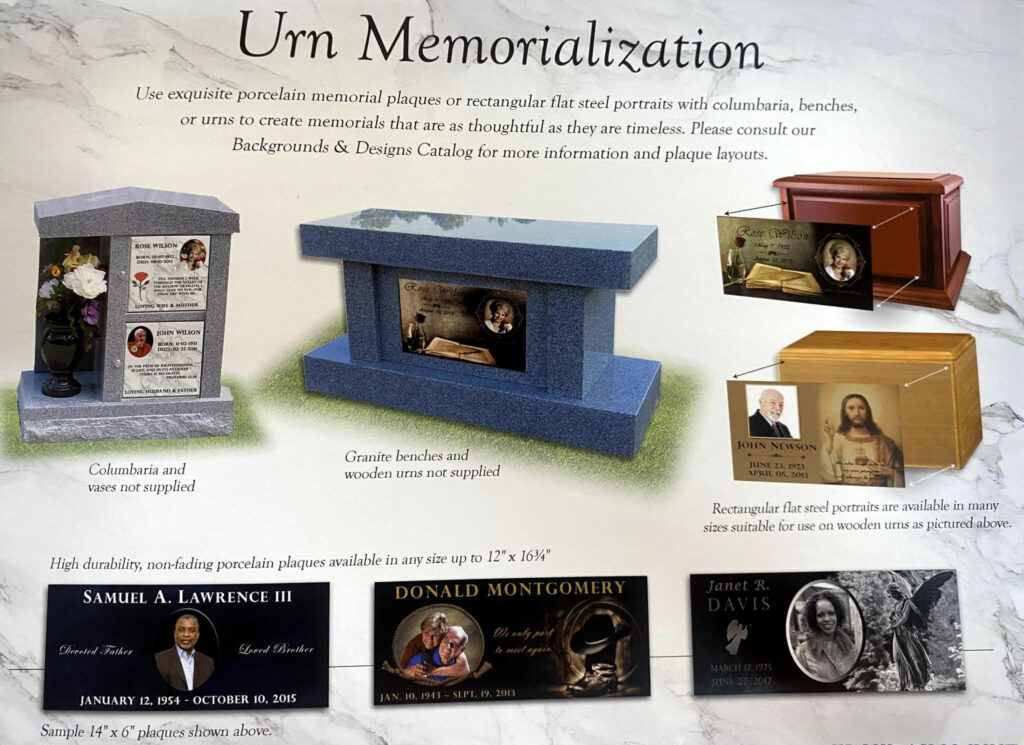
Depending on the material, an urn may be personalized with a name, dates, scripture, symbols, artwork, or a short message. Ask which details can be added and review the design proof before the urn is completed.
Cemetery Memorial Options After Cremation
Families who choose cremation can still create a permanent place for relatives and friends to visit.
Cremation Burial Plots
Many cemeteries have plots for cremated remains. Some also allow one or more urns in a traditional cemetery plot. Depending on cemetery rules, the site may be marked with a flat grave marker or upright monument.
Columbarium Niches
A columbarium contains individual compartments called niches. Each niche holds one or more urns and is usually closed with an engraved stone or bronze panel. Columbariums may be indoors, outdoors, or inside a mausoleum.
Cremation Monuments and Grave Markers
A cremation burial site may be marked with a flat grave marker or upright monument. The memorial may include names, dates, inscriptions, symbols, and custom artwork.
Memorial Benches
A granite memorial bench provides a place to sit and serves as a permanent tribute. Cemeteries and memorial gardens may permit benches in approved locations.
Cremation Scattering and Permanent Memorials
Some families scatter cremated remains in a place that held special meaning. Before scattering, check local rules and obtain permission from the property owner or managing agency when required.
Scattering does not rule out a permanent memorial. A family may still place a marker, plaque, or memorial bench in an approved location.
Questions to Ask Before Choosing a Cremation Memorial
Start with these questions:
- Where will the remains be placed—at home, in a cemetery plot, in a columbarium, or scattered?
- Does the family want a permanent place to visit?
- Will the remains stay together or be divided?
- What personalization best represents the person?
- What does the cemetery allow?
- Is an urn vault required for burial?
- What budget does the family need to stay within?
Contact the cemetery before ordering an urn, marker, monument, or bench. Its requirements may affect the permitted size, material, and style.
Working With a Local Monument Company
A local monument company can explain the available cremation memorial options, help confirm cemetery requirements, prepare a design proof, and coordinate delivery and installation. Families can ask questions and review the design before it is completed.
Choosing the Right Cremation Memorial for Your Family
There is no single cremation memorial that works for every family. The right choice depends on where the remains will be placed, how your family wants to remember your loved one, cemetery requirements, and your budget.
Taking time to compare cremation urns and memorial options can help your family choose a tribute that feels personal, practical, and appropriate.
Contact Texas Monuments
33803 US Highway 96 South, Buna, TX – (409) 867-2707
250 E. Gibson St. Jasper, Tx 75951 – (409) 239-3804
texasmonuments.com
Monday–Friday: 9:30 a.m.–4:00 p.m.
Free consultations and custom design drafts are available. Contact our team to discuss urn design and cremation memorial options.